



The holidays often mean more time in the kitchen, preparing festive meals for family and friends.
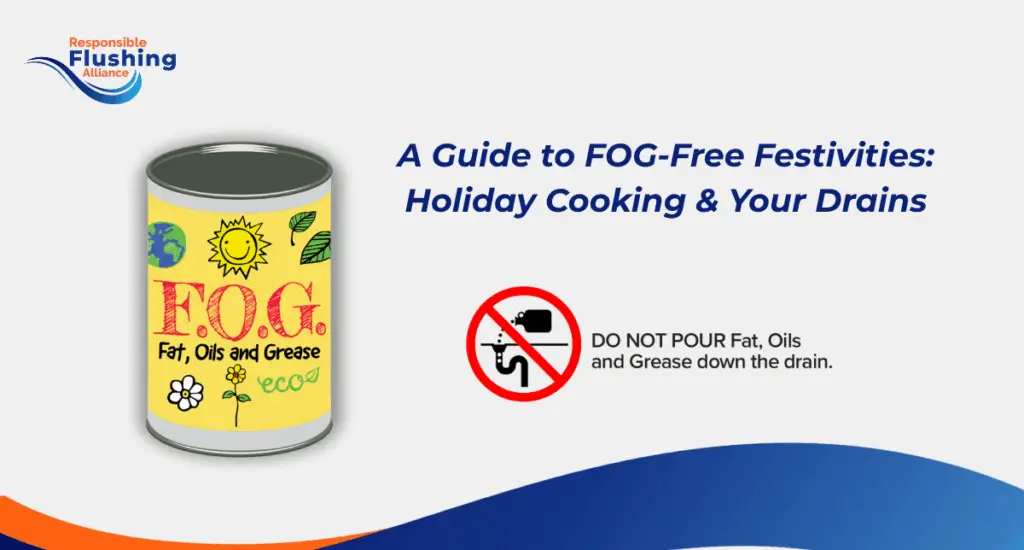
But there’s a hidden scrooge lurking behind the culinary delights and good cheer: FOGs — the fats, oils and grease that can lead to common plumbing and wastewater treatment problems when they find their way down the drain.
The FOG Problem
FOGs are byproducts of food items and cooking, including:
- Meat drippings (like from turkey, ham, roasts)
- Cooking oils (vegetable, olive, canola)
- Gravy and sauces
- Butter and margarine
- Dairy products (heavy cream, sour cream)
- Food scraps with high fat content
When these FOGs are poured down the drain, they cool and solidify. Over time, they accumulate and congeal inside your pipes, forming blockages that restrict water flow. These blockages, often called “fatbergs,” can lead to problems in your home and well beyond it:
- Home plumbing issues like clogged drains, slow drainage and sewage backups into your sink or home can require expensive emergency plumbing services to remediate.
- Sewer system overflows from clogs in municipal sewer lines can cause raw sewage to overflow into streets, homes and local waterways, posing public health and environmental risks.
- Increased community costs are a direct result when local wastewater treatment facilities spend substantial resources each year clearing FOG-related blockages.
Simple Steps for Proper FOG Disposal
Fortunately, preventing FOG-related plumbing problems is straightforward. Just follow these steps to keep your drains clear of pesky goop this holiday season:
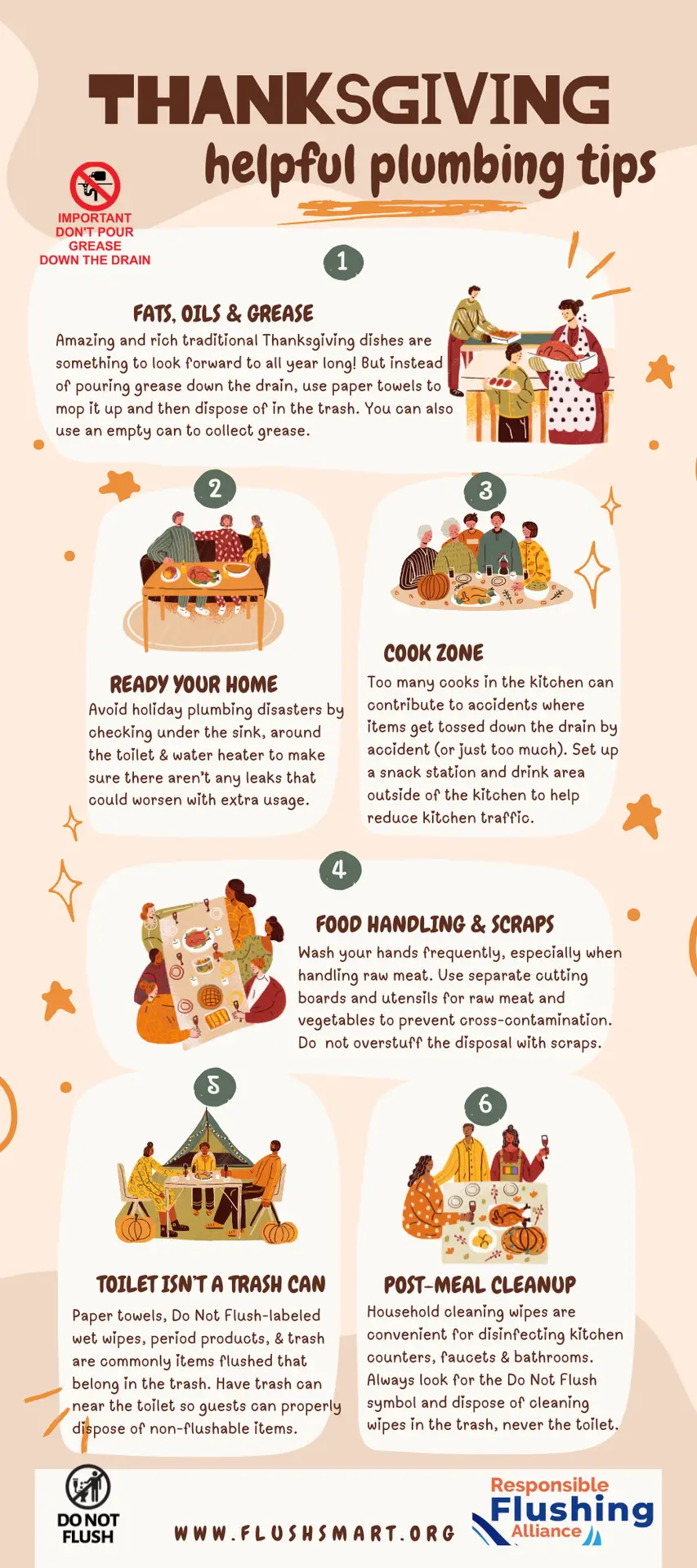
- Scrape: Before washing, scrape all food scraps and excess grease from dishes, pots and pans directly into the trash can.
- Wipe: Use a paper towel to wipe out any remaining grease or oil from cookware. Dispose of the soiled paper towel in the trash.
- Collect: For larger quantities of liquid FOGs (like used cooking oil or meat drippings), pour them into an old coffee can, glass jar, or other disposable container. Allow it to cool and solidify before throwing in the trash.
Keep Pipes Clean and Clear All Year
While FOGs are a major culprit, many other common household items can cause significant plumbing and sewer system issues. Remember, your toilet and drains are not trash cans!
Watch out for:
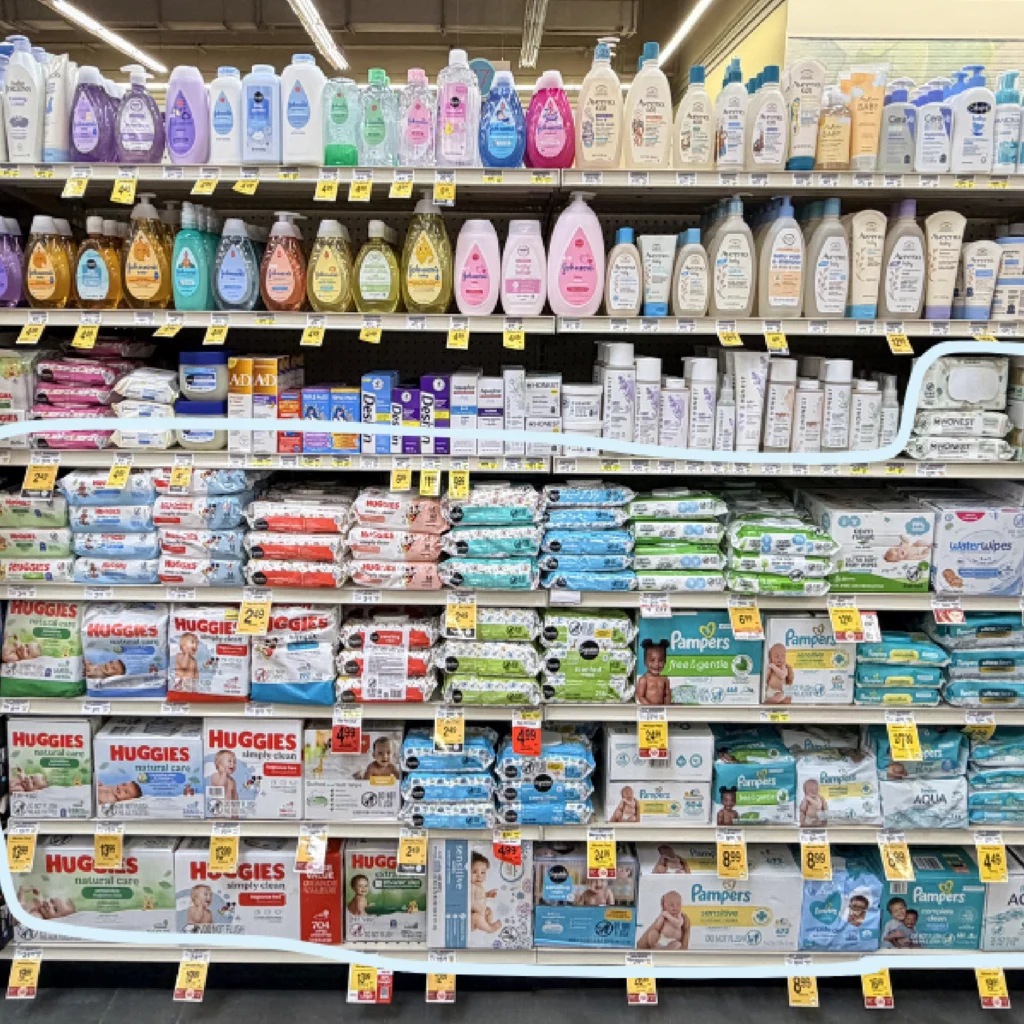
- Wipes with the Do Not Flush symbol: Wipes that are commonly found in the bathroom but not meant for flushing — such as baby wipes, cleaning wipes, and makeup wipes — are not meant to go down the toilet. Check wipes packaging for the Do Not Flush symbol, and if you see it, put the wipe in the trash.
- Paper towels & facial tissues: These are designed to be absorbent and durable, not to disintegrate in water. They go in the trash, never the toilet.
- Wrapping paper: Also not designed to break apart in water. Likely to wad up and block pipes. Trash it.
- Dental floss: It can tangle around other debris, forming larger blockages. Goes in the trash.
And everything else: (Other than human waste, toilet paper, or wipes labeled as flushable) should never go down the toilet. Trash it, don’t flush it!
Your Role in Protecting Our Infrastructure
By making a conscious effort to properly dispose of FOGs and other non-flushable items, you’re helping protect your own home from costly repairs while contributing to the health of the community’s wastewater infrastructure and the environment.
Let’s enjoy our delicious meals and keep our drains clear this holiday season. From all of us at the Responsible Flushing Alliance, we wish you a safe and clog-free holiday!